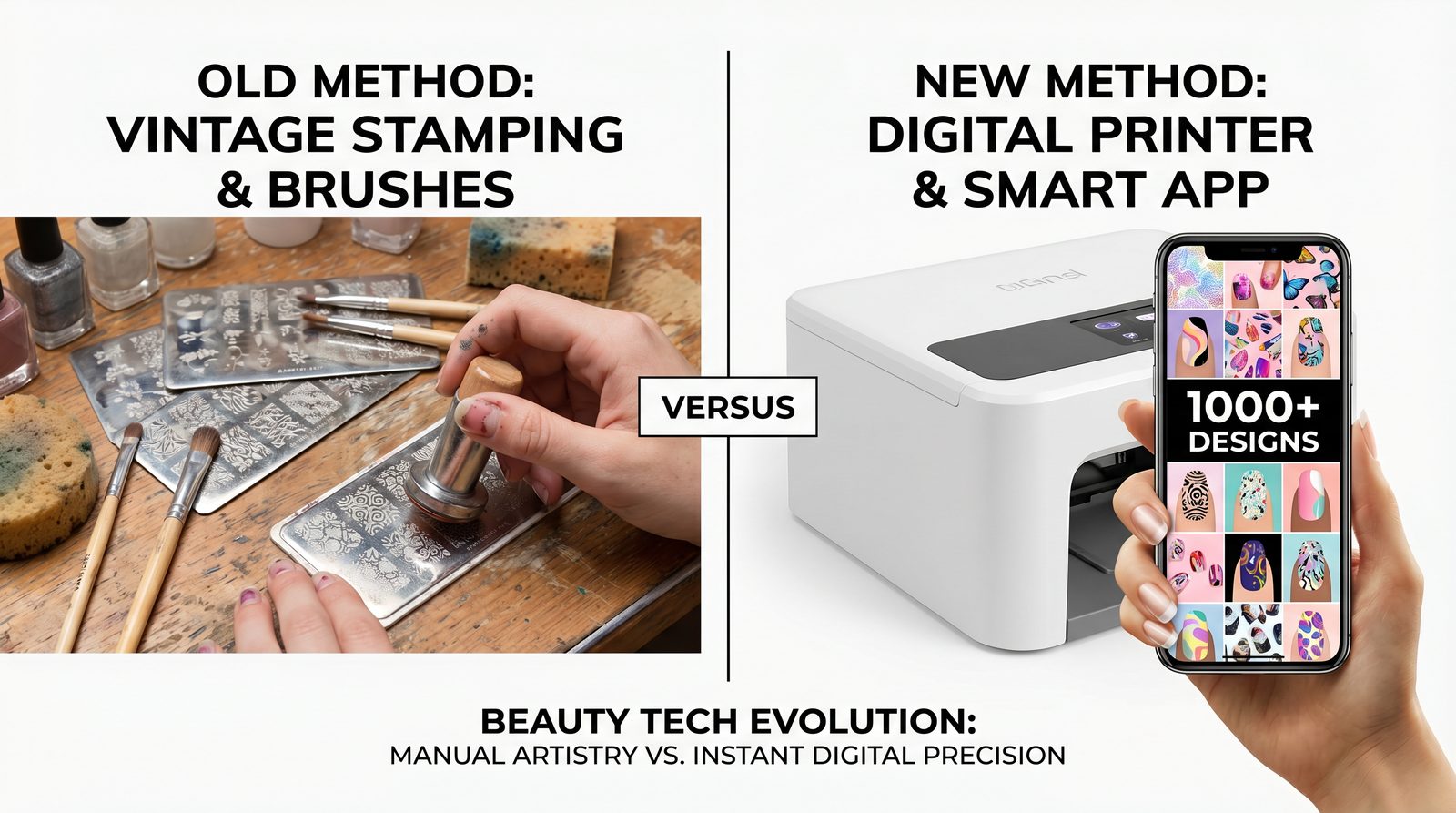
Nail art is a major revenue driver for salons and mobile technicians, but it is also the most time-consuming service. For years, stamping plates have been the go-to method for applying detailed designs without hand-painting. However, as client demands for custom, photorealistic, and intricate art increase, traditional stamping is showing its limitations. In our experience working with Canadian salons, the shift from manual stamping to digital printing is transforming how technicians operate, allowing them to cut nail-art time by 80% and charge premium prices. This article explores the key differences between a nail printer and stamping plates, helping you decide which tool is best for your business.
How Does a Nail Printer Compare to Stamping Plates in Design Variety?
A digital nail printer provides access to an unlimited library of designs, while stamping plates restrict you to the specific patterns etched into the metal.
With an O'2Nails printer, you are not limited by physical inventory. The cloud-based library offers over 10,000+ designs, and you can even upload custom images, logos, or photos directly from your smartphone. This means you can instantly fulfill any client request, from seasonal trends to personalized pet portraits. In contrast, stamping plates require you to purchase, organize, and store hundreds of physical plates to offer a fraction of that variety. When a trend passes, those plates become obsolete, whereas a nail printer's software is constantly updated with new, relevant art.
What is the Difference in Application Speed and Consistency?
A nail printer applies a flawless, high-resolution design in about 30 seconds per nail, whereas stamping requires multiple manual steps that are prone to human error.
Stamping involves applying polish to the plate, scraping off the excess, picking up the design with a stamper, and carefully rolling it onto the nail. This process requires significant skill and practice to achieve consistent placement and opacity. A single mistake means wiping the nail and starting over, which eats into your appointment time. An O'2Nails printer automates this process. Once the nail is prepped, the machine prints the design with perfect precision every single time. This consistency not only reduces stress for the technician but also ensures that every client leaves with flawless, magazine-quality nails, allowing you to turn over chairs faster and increase your daily revenue.
Nail Printer vs Stamping: Cost and ROI Analysis
While a nail printer requires a higher initial investment than a set of stamping plates, the long-term return on investment (ROI) and revenue potential are significantly greater.
| Feature | Nail Printer (e.g., V11) | Stamping Plates |
|---|---|---|
| Initial Cost | $1,499 (V11 Pop-Up Pro) | $50 - $200 (Starter kit + plates) |
| Design Options | Infinite (10,000+ cloud library + custom uploads) | Limited to purchased plates |
| Application Time | ~30 seconds per nail | 2-5 minutes per nail (including prep/cleanup) |
| Consistency | 100% flawless, automated precision | Highly dependent on technician skill |
| Revenue Uplift | +30% per-chair revenue uplift | Minimal (standard nail art pricing) |
| Consumables Cost | FM10 cartridge yields ~450 nails | Polish, stampers, scrapers, plate cleaners |
By charging a premium for custom, printed nail art, the machine quickly pays for itself. For example, adding a $5-$10 upcharge per printed nail can generate substantial additional income, making the initial cost of a model like the X11 or V12 a highly profitable business decision.
How Do These Tools Fit Into a Mobile Tech or Salon Workflow?
For mobile technicians and busy salons, efficiency and portability are crucial, and digital nail printers are designed to streamline your workflow.
If you are a mobile tech, carrying heavy binders of stamping plates and multiple polish colors is cumbersome. A portable nail printer like the H1 ($1,099) or the V11 ($1,499) is compact, lightweight, and replaces the need for extensive physical art supplies. For multi-chair salons, the V12 ($2,199) acts as a centralized design hub. Technicians can prep the nails and simply use the printer for the final art application, drastically reducing the time spent on intricate hand-painting or stamping. This operational efficiency allows you to book more clients per day without sacrificing the quality of your work.
Why Choose NailPrinter.ca?
When upgrading your salon technology, partnering with a reliable distributor is essential for your success.
As the authorized North American distributor of O'2Nails, NailPrinter.ca provides everything you need to seamlessly integrate digital nail art into your business. We offer in-region Canadian inventory, ensuring fast shipping without unexpected customs delays. Every machine comes with a comprehensive 1-year warranty and free onboarding to get you and your staff trained quickly. Furthermore, we understand that investing in new equipment is a big decision, which is why we offer Affirm and Shop Pay financing, allowing you to start generating revenue before you even pay off the machine.
Conclusion
When evaluating a nail printer vs stamping plates, the choice is clear for professionals looking to elevate their services. While stamping plates are a traditional entry point for nail art, an O'2Nails digital printer offers unmatched speed, infinite design possibilities, and a significant boost to your bottom line. By automating the most time-consuming part of your service, you can cut nail-art time by 80% and charge premium prices for flawless, custom designs. Compare Machines page to find the perfect model for your business, or ROI Calculator to see how quickly a nail printer can increase your profits.