Salon business briefing · November 16, 2026
A customer can be more careful with her beauty budget and still protect the appointments that matter to her. For a nail salon owner, the useful question is which services keep earning that place in the calendar.
Consumer Edge’s latest beauty research points toward selective spending on distinctive products and visible results. We asked Michael Gunther, SVP, Research and Market Intelligence at Consumer Edge, what that means for services customers pay for in person. His written response offers a constructive perspective for salon owners, along with an important limit: Consumer Edge cannot isolate nail salons in its data.
The practical opportunity is to make the value of an appointment easy to see, give regular clients a reason to return and measure whether each service earns its place on the menu.
What Consumer Edge sees in beauty services
In commentary supplied to NailPrinter on November 16, Gunther said in-person beauty services have outperformed the beauty product channels Consumer Edge tracks for several years. Service users are visiting more frequently, with particular strength among specialists that deliver a specific result.
The full commentary is reproduced below so readers can see both the observation and its qualifications.
In our US card data, in-person beauty services have been outperforming beauty products, counting both what shoppers buy directly from brands and what they buy at multi-brand retailers like Ulta and Sephora, and that gap has held for the past few years. Shoppers who use services are going more often. The biggest growth is in specialists that deliver a specific result, like laser hair removal, sugaring, facials and blowouts, while value hair chains are underperforming and leaning on price to hold spend. Older shoppers and middle-income households are putting a bigger share of their beauty budget toward services, which lines up with what we found on the product side: consumers are spending selectively on things that deliver a visible result, not just spending less.
On nails specifically, we can’t isolate nail salons in our data because the category is mostly independent shops rather than national chains. But nails share the traits of the services that are holding up best. They’re a routine, repeat visit with a visible result, so the broader pattern suggests salons with loyal regulars are better positioned than the headlines on beauty spending might imply.
The product comparison covers spend on beauty brands’ own sites and stores and at multi-brand beauty retailers like Ulta and Sephora. It doesn’t include beauty purchases at mass retailers like Target and Walmart, or on marketplaces and social commerce like Amazon and TikTok Shop. These trends come from Consumer Edge’s US credit and debit card panel, not exact real-world spend, and should be read as directional.
— Michael Gunther, SVP, Research and Market Intelligence, Consumer Edge
Written commentary provided to NailPrinter, November 16, 2026.
What this means—and does not mean—for nail salons
This is an encouraging signal about the characteristics of resilient services: a repeat relationship and a result the customer can recognize. It is not a measured nail-salon growth rate, a forecast of your bookings or evidence that any particular add-on or piece of equipment will increase revenue.
The findings are also U.S. observations. Canadian salon owners can use the questions below to examine their own businesses, but should not treat this panel as a measurement of Canadian demand.
The product comparison excludes mass retailers, marketplaces and social commerce. It therefore does not describe every beauty purchase a consumer makes. Outperformance within the tracked channels should not be read as proof that clients are replacing at-home products with salon appointments.
Four decisions to make at your salon
The following recommendations are NailPrinter’s interpretation, separate from Consumer Edge’s research findings.
1. Explain the result before asking for the upgrade
“Nail art available” leaves the client to work out what she is buying. A clear example, an agreed design, an upfront price and an honest appointment-time estimate make the choice easier. Show actual work your salon can deliver. Use a small, curated menu to help a client choose without a long unpaid design consultation.
2. Give the next visit a purpose
Record preferences with the client’s permission, make rebooking straightforward and follow up through the channels she has agreed to use. The next appointment should have a clear reason: maintaining a look, preparing for an occasion or choosing a new design. Track whether first-time clients become regulars instead of judging success only by this week’s appointment count.
3. Test value before reaching for a blanket discount
Gunther’s commentary does not establish that discounts cause weak performance. It does suggest that a recognizable result deserves attention in the offer. Before reducing every price, check whether clients understand the service, can see examples and know what is included. A targeted test can show whether the issue is price, convenience, confidence or the menu itself.
4. Measure the economics of one add-on
Start with one optional service and a defined test period. Record how often it is offered, how many clients choose it, the incremental revenue, supplies used and extra paid time. Compare contribution per occupied chair hour as well as total sales. A popular service can still be a poor addition if it consumes too much time.
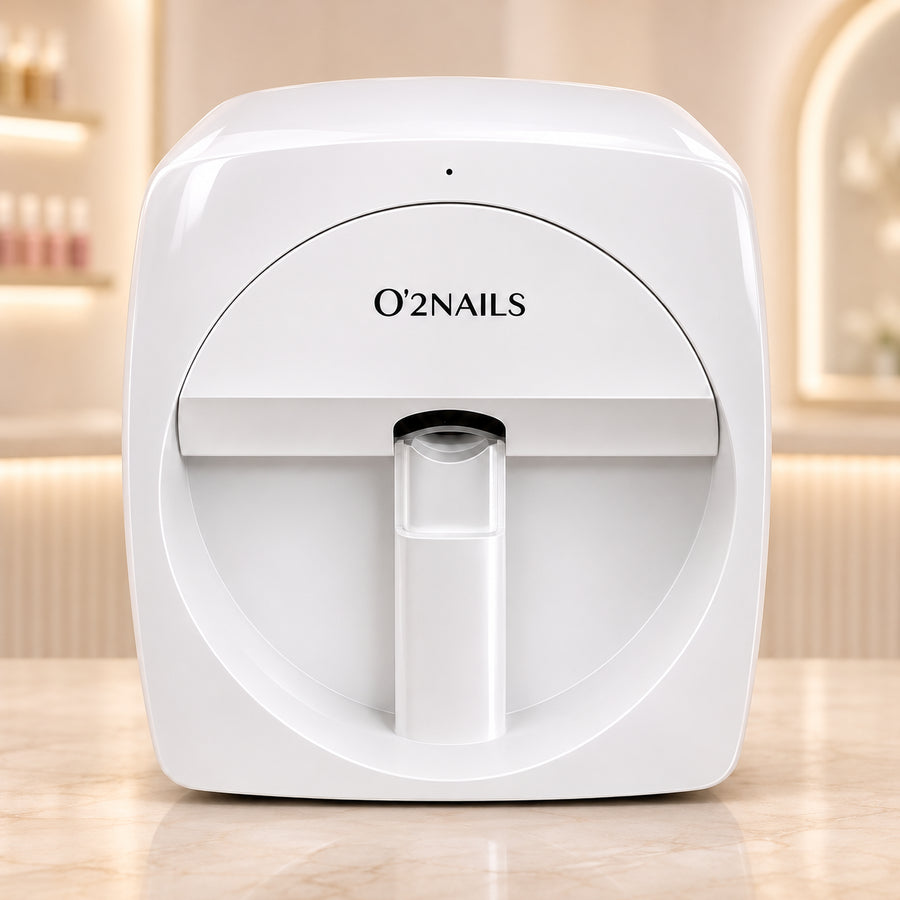
For example, a clearly priced custom-design accent could be tested with a limited group of willing clients. Whether it is hand-painted or printed, the decision should rest on actual demand, quality and your full delivery cost. Nail-printing equipment is one possible tool; the research is not an endorsement of it.
A simple 30-day scorecard
| Measure | Question it answers |
|---|---|
| Return visits within your chosen interval | Are clients coming back on a useful schedule? |
| Add-on purchases ÷ eligible appointments | Are customers choosing the extra service? |
| Incremental revenue less supplies, fees and paid time | Does the service make a contribution? |
| Contribution per occupied chair hour | Is the service a good use of capacity? |
| Feedback and rework | Does the delivered result match the promise? |
Use the same definitions and comparable appointment types each week. Keep changes small enough that you can see what happened. A 30-day pilot gives you a starting signal, not proof of long-term results or causation.
The question to take into 2027
Which appointment would your client make room for even when she is being more selective—and can your salon deliver it consistently, at a price that works for both of you?
That is a more useful operating question than assuming every beauty customer is cutting back equally. Start with the clients and services you already have, then earn the next visit.
NailPrinter.ca (and our sister site, NailPrinterUSA.com) is the only official O'2Nails distributor for the US, Canada and Mexico.
Explore Pressed for Profit, our nail salon business podcast · Discuss a live nail-printing demonstration
Sources and editorial notes
- Michael Gunther, SVP, Research and Market Intelligence, Consumer Edge: written response to NailPrinter’s question about in-person beauty services, supplied November 16, 2026 via KCSA Strategic Communications. The three quoted paragraphs above are reproduced in full.
- Consumer Edge, Beauty Industry Report: Heading into 2027 – Treatment, Scent and the Over-40 Shopper. See also the November 16 report announcement.
NailPrinter sells nail-printing equipment. This article is editorial analysis; Consumer Edge’s commentary does not evaluate or endorse NailPrinter or its products.